Candidate evaluation and promotion
Candidate evaluation answers a narrower question than Historical diagnosis: did one controlled change improve a fixed business task under comparable evaluation conditions?
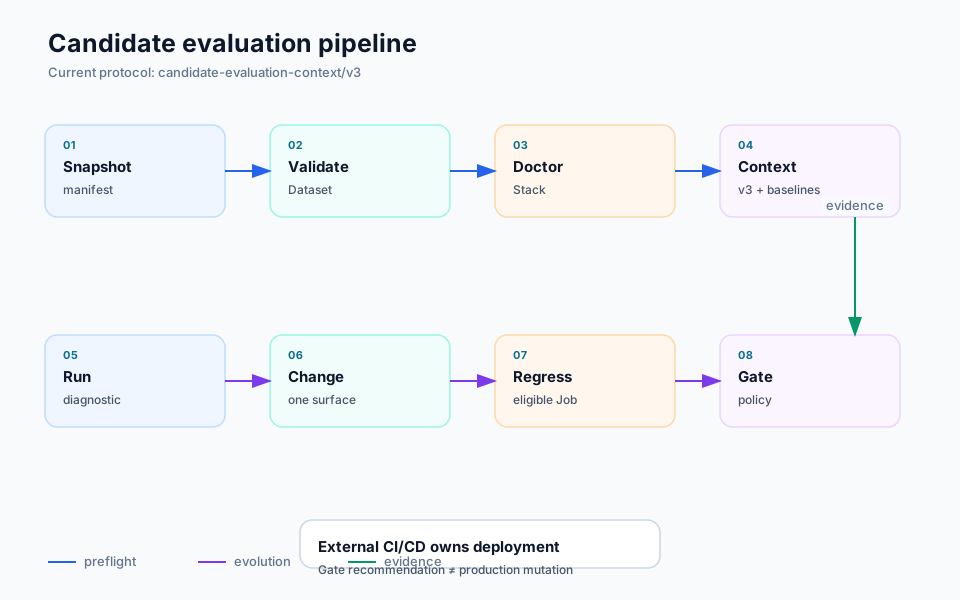
Strict sequence
- Snapshot Candidate into an immutable manifest.
- Validate Dataset identity, task uniqueness, paths, sensitive metadata and source digest.
- Doctor Candidate, Dataset, Evaluation Stack and optional Promotion Policy.
- Preview Context v3 and discover comparable baselines before spending on a Job.
- Run diagnostic first when the stack or provider path is new.
- Change one controlled surface—Agent or Evaluator, not both silently.
- Run promotion-eligible regression with fixed identities.
- Inspect progress, Trial output, criterion evidence and governance impact.
- Compare and Gate against a comparable baseline.
Comparability
A baseline is not comparable merely because it used the same repository. Candidate manifest, Dataset manifest, Evaluation Stack, Context, execution environment and relevant model/Judge identities must satisfy the contract. A changed Dataset digest, stack version, provider identity or runtime boundary can require a fresh baseline.
Gate
The Gate is deterministic for fixed baseline Job, Candidate Job and policy inputs. It can return PROMOTE or REJECT based on valid score movement, minimum improvement, regressions, coverage and other policy conditions.
It does not deploy, mutate the Champion or bypass external CI/CD approval.
Version 0.9.7 accepts Candidate Context v3 in both Dashboard overview and Job detail. Compare/Gate still remain capability-gated by artifact validity, comparable identities, mode and policy.
What a release test does not prove
0.9.7 did not run a real provider model, real Candidate/Historical Session data, or a paid Harbor evaluation; automated tests do not establish a business-quality baseline. Your Dataset, Evaluator and production evidence must establish that baseline.